In this post, Chong-Ming Lim discusses the article he recently published in Ergo. The full-length version of Chong-Ming’s article can be found here.
Political philosophers are increasingly directing their attention to objectionable public commemorations – things that honour morally or politically objectionable subjects. A clear example of an objectionable commemoration is a statue honouring a slave-owner or genocidaire. Many philosophers now think that a crucial problem with objectionable public commemorations is that they express hateful or pejorative messages. Arguably, honouring a slave-owner or genocidaire expresses contempt for their victims and potentially declares that their experiences and suffering do not take away from the glory of the honoured subject.
For the most part, I agree with these claims. However, they focus narrowly on one way in which public commemorations can be objectionable. We should broaden our sights. To do this, I articulate an account of what I call “commemorative artefactual speech”, and show how such speech can go awry beyond expressing hateful or pejorative messages.
On my account, commemorative artefactual speech occurs when an authorised member of a group uses an artefact to declare the importance of remembering a historical subject, in virtue of some feature of that subject. Someone is an authorised commemorator if they have the right kind of standing to speak on behalf of the group as a whole. This can be, among other reasons, because they’ve been democratically elected or otherwise picked out by procedures that people endorse.
These authorised commemorators make use of artefacts to declare that some historical subject is important for the group to remember. Usually, they choose something made from a durable material (such as stone for statues or metal for coins), or something that can be easily reproduced in large quantities (such as printed paper for banknotes and stamps).
A historical subject can be important because they have established the group, made significant contributions to the group, or even adversely affected the group, and so on. These historical subjects are often picked out based on some feature they are believed to have, which renders them worthy of commemoration, and which is often cited as part of the explanation for why they (rather than others) are being commemorated. I keep the relevant sense of importance open.
Within the framework I offer, one can see more clearly that commemorative artefactual speech can go wrong in a variety of ways. Of course, as many have pointed out, it can be directed at inappropriate subjects who are not in fact worthy of being commemorated. However, it can also be problematic if it is made by people who lack the relevant standing, or if it unfairly excludes people who possess the feature being commemorated: for instance, a statue that commemorates the war dead but includes only men and not women.
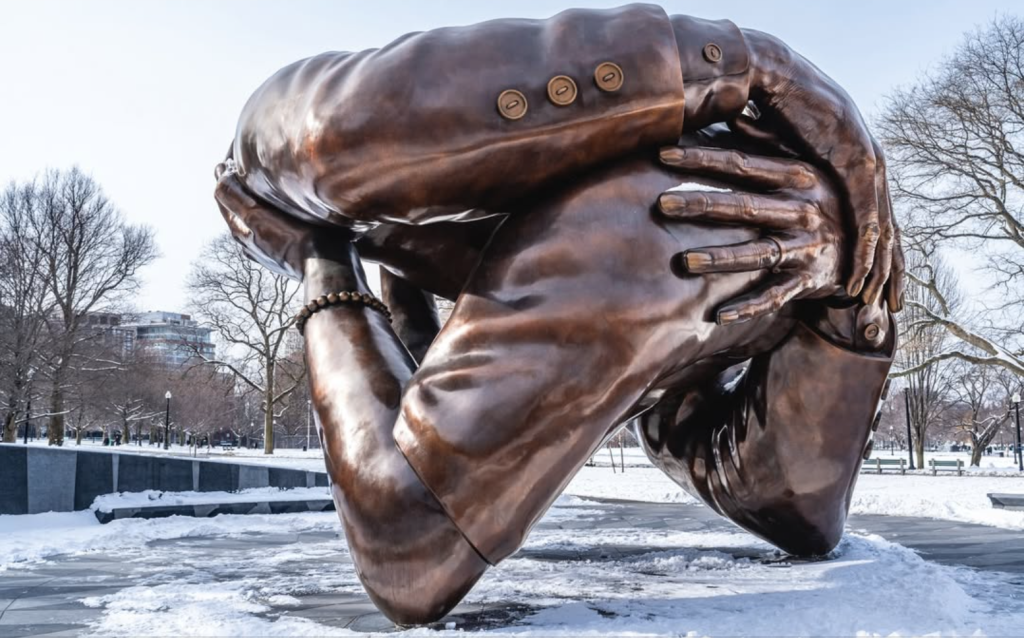
Commemorative speech can also be problematic if the aesthetic features of the artefacts do not mention (or do not match) the feature in virtue of which some historical subject is being commemorated. Consider “The Embrace”– a sculpture commemorating Martin Luther King, Jr., and Coretta Scott King. This sculpture takes the form of four disembodied arms intertwined in an embrace, and it has been widely criticised for being ugly. My account reveals that the ugliness is connected to a further problem: arguably, the commemorative artefact not only fails to mention the feature in virtue of which the Kings are being commemorated, but it even fails to identify them as the targets of the commemoration.
Commemorative artefactual speech can go wrong in several other ways. In the paper, I discuss and illustrate some of them by appeal to a variety of examples, including the Vietnam Veterans Memorial Wall, statues of Confederate soldiers, and commemorations of Winston Churchill.
Want more?
Read the full article at https://journals.publishing.umich.edu/ergo/article/id/7962/.
About the author
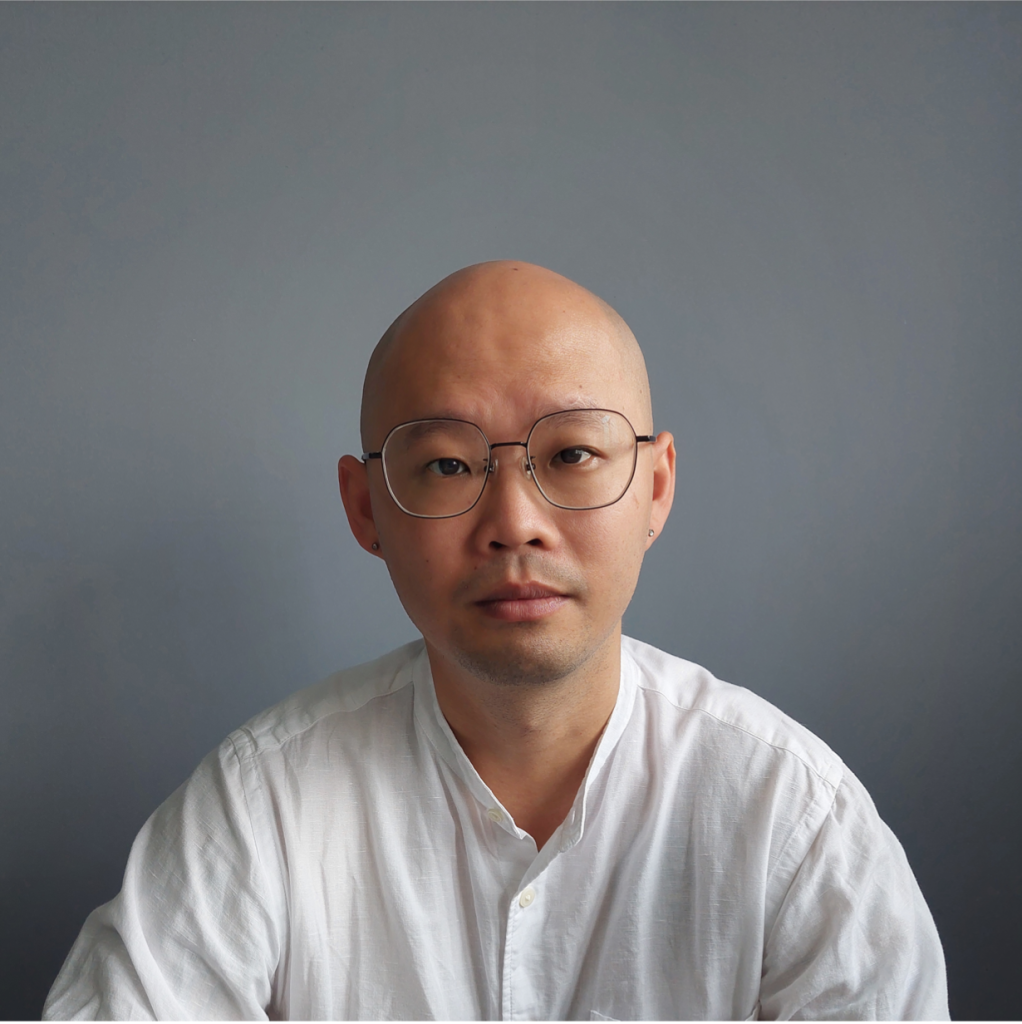
Chong-Ming Lim is a Lecturer in Political Philosophy at the University of Sheffield. His research focuses on political resistance and public commemorations. He is now writing a book on commemorative justice (under contract with OUP).